Charles Bridge
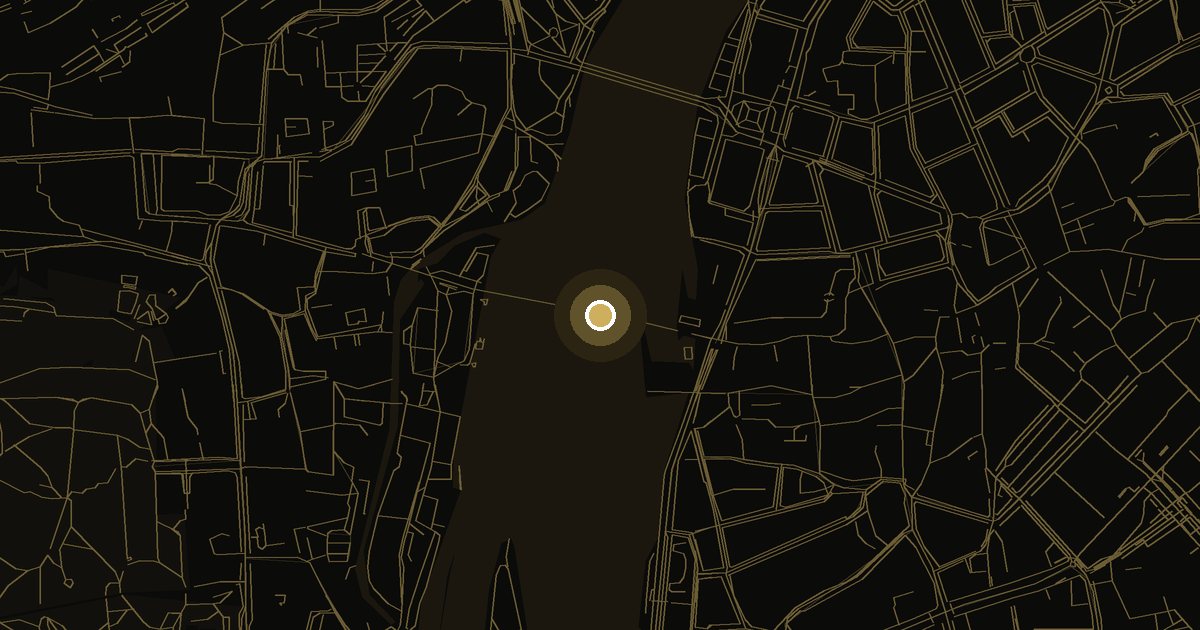
Charles Bridge and the River · Czech name: Karlův most
Charles Bridge was begun in 1357 by Charles the Fourth, after a flood destroyed the older Judith Bridge in 1342, and it was finished around 1402. It is 516 metres long, with sixteen arches, and until 1841 it was the only bridge in Prague. The thirty statues were added between 1683 and 1714. It was called simply the Stone Bridge until 1870. Cars were banned in 1965. Come early in the morning for the best experience.
What you see
Sixteen stone arches, a cobbled deck too narrow for the crowd on it, and thirty blackened statues lining both parapets like a guard of honour. Towers at each end. The water below moves faster than you'd expect.
The story
Charles Bridge is the oldest standing bridge over the Vltava in Prague, and it was built to replace an older one. The first stone bridge in the city, Judith Bridge, was built by King Vladislaus the Second and finished in 1172, named after his wife, and it was destroyed by a flood on the third of February 1342. For years Praguers crossed on a wooden stopgap or by boat.
Preparing the new bridge took time, because plans had to be drawn up, money raised, stone found and a way to build the piers in the river worked out. Work started in 1357 under King Charles the Fourth and was finished in 1402. The bridge was so expensive that the kingdom collected donations in the churches, and when it opened, people had to pay a toll, which was abolished only in 1816.
Until 1841 it was the only bridge in Prague, which made it a key crossing on the trade routes of Central Europe. Now the famous legend of the foundation. It says that Charles, who loved astrology, had the foundation stone laid at thirty-one minutes past five in the morning on the ninth of July 1357, so that the numbers read as a palindrome: one, three, five, seven, nine, seven, five, three, one.
In fact, the chronicler who lived at the time wrote only that the emperor laid the first stone in 1357 near the monastery of Saint Clement. The ninth of July appears only in a chronicler three centuries later, and in his original text the year is 1358, which has been confused with 1357 for more than a hundred years. So treat the palindrome as a beautiful legend, and the astronomical explanation as an invention of the twentieth century.
Who designed it? For a long time, everyone said Peter Parler, but the plans were probably drawn up by Matthias of Arras, the first architect of Saint Vitus, using the bridge at Avignon as a model, and a hypothesis published in 2007 suggests a Prague stonemason and burgher called Otto, or Otlin, as the designer and first builder. The piers were built in cofferdams of stakes and clay, reinforced with oak piles and oak grids, and set on large round stones shaped like millstones, joined by iron clamps.
There is another legend, that eggs were added to the mortar. In 2010 chemists from the university in Prague announced that they had analysed the mortar and found no eggs. The river has always been the bridge's enemy.
Floods threatened it even during construction, in 1359, 1367, 1370, 1373 and 1374, and in July 1432 a huge flood destroyed five piers, which took until 1503 to repair, a full seventy-one years. In September 1890 floating timber from broken rafts battered the piers, and on the fourth of September, at half past five in the morning, two or three arches collapsed, depending on the account, and two statues fell into the river, Saint Ignatius of Loyola and Saint Francis Xavier by Ferdinand Brokoff. The repair, completed in November 1892, was the first to use iron caissons, and the sunken statues were raised in 1901.
In 2002 the bridge survived a hundred-year flood without visible damage. For hundreds of years the bridge was a street with shops: sausage sellers, comb makers and bakers, until the last stalls were taken down in 1828. In 1759 the first traffic rules ordered people to walk or drive only on the right side.
Horse trams crossed from 1883, electric trams from 1905 using contacts in the road, so that no overhead wires would spoil the view, but they were stopped in 1908, and buses came and went. Cars were banned in 1965, and since the big repair of 1965 to 1978 the bridge has been for pedestrians only. The sculptures give the bridge its character.
Thirty mostly baroque statues were added, with a cross standing at the site of the Crucifixion since the days of Charles, and the first statue was that of Saint John of Nepomuk, set up in the late seventeenth century. According to tradition, Wenceslas the Fourth had John thrown from the bridge in 1393, and a small metal cross on the parapet marks the spot. Most statues were added between 1707 and 1714, and the finest include the Saint Luitgard of Matthias Bernard Braun and many works by Ferdinand Maxmilián Brokoff.
The originals have been replaced step by step by copies, and most of the originals are now stored in the Lapidarium at the Exhibition Grounds and in the Gorlice hall at Vyšehrad. On a November day in 1918 a crowd that had just pulled down the Marian column on Old Town Square wanted to throw the statues from the bridge into the river, and soldiers closed the bridge until the sixth of November to prevent it. Look down the length of the bridge.
It is about 516 metres long, carried on sixteen stone arches, and roughly nine and a half metres wide. It was not called Charles Bridge until 1870; before that it was simply the Stone Bridge or the Prague Bridge. In 1648, near the end of the Thirty Years' War, the heaviest fighting of the Swedish attack on Prague took place here.
The knight Bruncvík was added much later, in 1884, about two hundred years after the first main group of statues. As you walk, notice the view in both directions, the castle high on its hill and the towers of the Old Town behind you. Come early in the morning, or at twilight, when the crowds thin out.
On these walks
- Prague highlights in 2 hours 8 stops
- The Royal Way: Powder Tower to the Castle 9 stops
- Quiet Malá Strana 5 stops
- Castle Hill, top to bottom 7 stops
- Evening and night 6 stops
Hear it on the spot
In Prago this story plays when you walk up to Charles Bridge. The map is on the phone, so it works with no signal, and there is no account and no tracking. Coming soon to the App Store.